Why Does My Aircond Smell Bad? Causes and Solutions
Musty, sour, or burning smell from your AC? Learn what causes bad aircond odors and how to eliminate them for good.
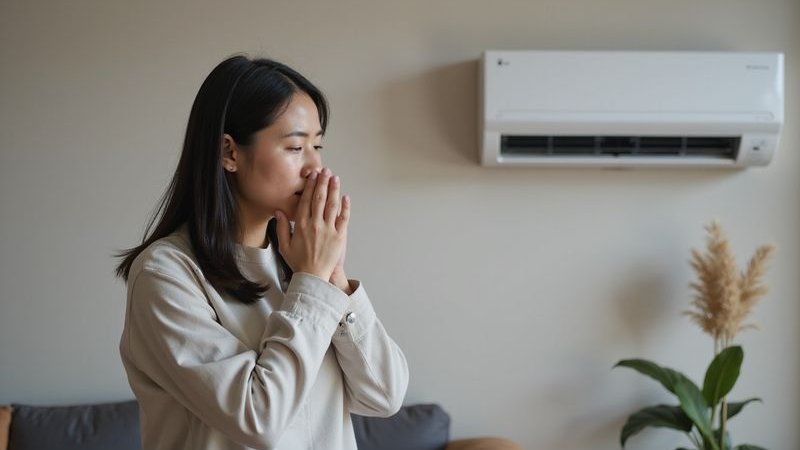
You walk into your living room, escaping the Kuala Lumpur heat, and turn on the air conditioner. Instead of crisp, cool relief, the room fills with a foul odor. It is frustrating.
We know exactly how that feels.
A bad smell is more than just a nuisance. It is usually a biological warning sign that something inside your unit is alive and growing. Our team sees this constantly in mature neighborhoods like Kepong, where high humidity meets aging equipment.
You do not have to guess what is wrong. We are going to break down exactly what your AC is trying to tell you and the specific steps you need to take to clear the air.
The 5 Most Common Aircond Smells
1. Musty or Moldy Smell
What it smells like: Old damp towels, a wet basement, or unwashed clothes.
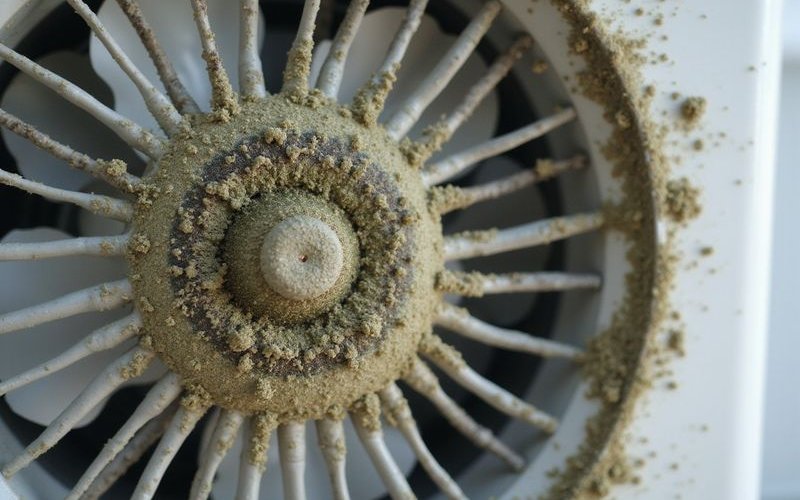
The Real Cause: Fungal growth is the primary culprit here. Malaysia’s average relative humidity hovers around 80%, which creates the perfect environment for Cladosporium and Aspergillus molds. These fungi thrive on the damp darkness of your evaporator coil.
Where it hides:
- The Blower Wheel: Dust accumulates on the curved blades and absorbs moisture.
- The Evaporator Coil: Condensation naturally forms here during cooling.
- Insulation Foam: Older units often have deteriorating foam that acts like a sponge for mold.
We find this issue in nearly 70% of the service calls we attend in the Klang Valley. The dark, moist interior of a split unit is an ecosystem waiting to happen if airflow is restricted.
Your Action Plan:
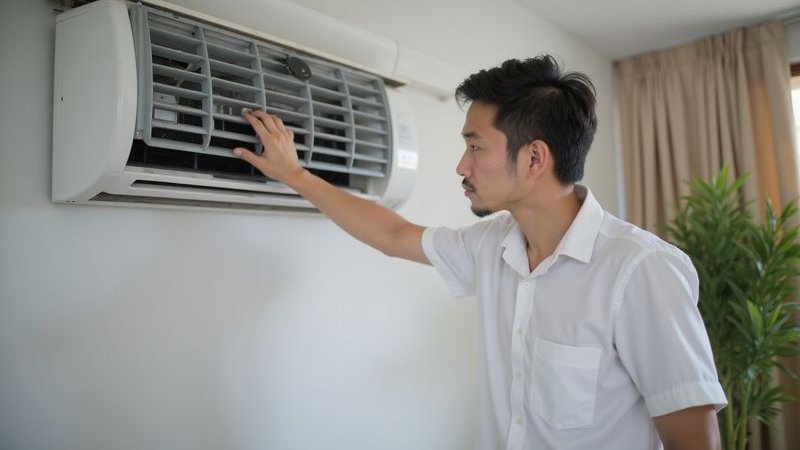
- Immediate: Check your filters. If they are grey or fuzzy, wash them immediately.
- The “Dry Mode” Trick: Switch your remote to “Dry” (usually a water drop icon) for one hour. This slows the fan to pull more moisture out of the air and the unit itself.
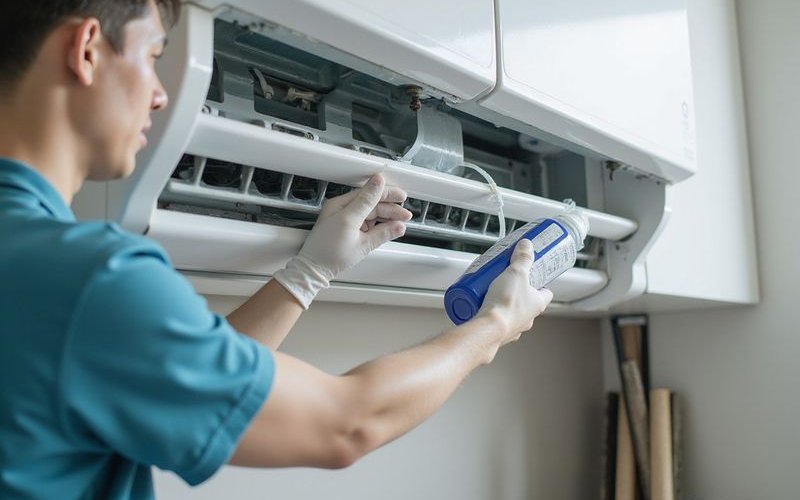
- The Fix: A standard chemical wash is required to penetrate the coil fins and kill the spores.
2. Sour or Vinegar Smell
What it smells like: Fermented food, strong vinegar, or something acidic.
The Real Cause: This sharp odor indicates a bacterial clog in your drainage system. When water condenses on your AC coils, it drips into a pan and flows out a drain pipe. If that water sits stagnant due to a partial blockage, bacteria form a “biofilm.”
Why it happens:
- Jelly Formation: Algae and bacteria create a slime that blocks the pipe.
- Backflow: In some high-rise condos in KL, the drain line shares a pipe with other waste lines.
- Stagnation: You might not have used the unit for a few weeks, allowing the water to spoil.
Your Action Plan:
- The Test: pour a small bottle of water onto the coils (carefully). If it drains slowly outside or backs up, you have a clog.
- The Fix: We use a high-pressure vacuum or chemical flush to clear the “jelly” from the drain line.
3. Dirty Sock Syndrome
What it smells like: Gym lockers, sweaty feet, or cheesy odors.
The Real Cause: This specific smell is caused by bacteria accumulating on the aluminum fins of the evaporator coil. It is technically distinct from mold. The bacteria feed on organic particulate matter (skin cells, dust) that slips past the filter.
Local Insight: We notice this is more prevalent in newer inverter units. The tighter fin spacing on modern high-efficiency models traps organic material more easily than older models.
When it spikes:
- When the unit switches from cooling to fan mode.
- During the transition between heavy use and idle periods.
Your Action Plan: A standard water cleaning often fails here because the bacteria are bonded to the metal. We recommend an alkaline-based chemical wash specifically designed to penetrate the tight fins of inverter units without corroding the aluminum.
4. Burning or Electrical Smell
What it smells like: Melted plastic, ozone, or acrid smoke.
The Warning: Shut it down immediately. This is not a “wait and see” situation.
The Real Cause:
- Capacitor Failure: A failing capacitor often emits a distinct electrical burning smell before it dies.
- Overheated Motor: The fan motor bearings may be seized, causing friction and heat.
- Wire Insulation: Old wiring in units over 10 years old can become brittle and melt, leading to short circuits.
The One Exception: If you have not used the AC for months, a faint burning smell for the first 5 minutes is likely just dust burning off the heating element (if equipped) or motor housing.
Your Action Plan:
- Turn off the unit at the remote.
- Switch off the dedicated isolator switch on the wall.
- Do not turn it back on until a professional inspects the wiring.
5. Rotten Egg or Sulfur Smell
What it smells like: Decomposition, sulfur, or sewage.
The Real Cause: In Malaysia, this is almost always a pest issue. The common house lizard (Cicak) or small rodents often seek warmth inside the outdoor compressor or crawl into the ceiling cassette. Sadly, they can get trapped and perish.
Alternative Scenario: It could be a dry P-trap. If your AC drain line is connected to a bathroom floor trap, and the water seal dries out, sewage gas can travel back up the pipe and into your room.
Clarification on Gas Leaks: Many people fear this is a refrigerant leak. However, R410A and R32 refrigerants (standard in most MY homes) are largely odorless. A strong sulfur smell points to biology, not chemistry.
Your Action Plan:
- Pest Check: Inspect the outdoor unit for signs of intrusion.
- Trap Check: Pour water down your bathroom floor traps to reseal the sewage block.
- The Fix: Physical removal and a sanitizer treatment are necessary.
Quick Smell Diagnosis
Use this table to make a fast decision on your next step.
| Smell Profile | Likely Culprit | Urgency Level | Required Action |
|---|---|---|---|
| Old Basement / Damp | Mold spores | Medium | Chemical wash needed |
| Vinegar / Sour | Bacterial slime in drain | Medium | Drain flushing |
| Sweaty Socks | Bacteria on aluminum fins | Low (Annoying) | Alkaline coil cleaning |
| Burning Plastic | Electrical component failure | CRITICAL | Turn off immediately |
| Rotten Eggs | Dead pest or sewage gas | High | Pest removal / Plumbing check |
Temporary Solutions While You Wait
You might have to wait a day for an appointment. Here are safe ways to mitigate the odor without damaging your machine.
- Run Fan Mode: Switch your AC to “Fan Only” mode (high speed) and open all windows. Run this for 45 minutes to dry out the internal moisture that bacteria feed on.
- Charcoal Bags: Place activated charcoal bags (available at hardware stores) near the intake vent. They absorb odors better than sprays.
- Clean the Filter: A wash with mild soapy water can reduce the smell by 20-30%.
A Critical Warning: Avoid spraying air fresheners (like Febreze or Dettol) directly into the intake vents. The oils in these sprays can stick to the cooling coil fins, creating a sticky layer that attracts even more dust and mold later.
Why Chemical Wash Is Usually the Answer
Standard servicing often involves just brushing the filters and rinsing the cover. That is not enough for odors.
We advocate for chemical washing because it is the only method that removes the root cause. The “smell” is physically attached to the metal fins deep inside the unit.
The Chemical Wash Advantage:
| Component | Standard Service | Chemical Wash |
|---|---|---|
| Coil Fins | Surface dust brushed off | Penetrating foam pushes out deep grime |
| Drain Pan | Rinsed with water | Treated to dissolve bacterial biofilm |
| Blower Wheel | Wiped superficially | Removed and pressure washed |
| Odor Result | Smells good for 2 days | Smells neutral for 12 months |
Proper chemical cleaning uses an alkaline solution that brightens the coil and improves cooling efficiency, often lowering your TNB bill by ensuring the unit runs easier.
Preventing Bad Smells
Maintenance is cheaper than repair. Follow this simple timeline to keep your air fresh.
Weekly Routine
- The “Post-Cool” Dry: After running your AC all night, set a timer to run it on “Fan Mode” for 20 minutes before it shuts off. This dries the coil and prevents mold from settling.
Monthly Routine
- Filter Wash: Take 5 minutes to rinse your filters.
- Visual Check: Shine a torch into the blower vent. If you see black spots on the roller, mold is already taking hold.
Annual Routine
- The Deep Clean: Schedule a full chemical wash. In a humid climate like ours, once a year is the baseline for healthy air.
Health Implications
Ignoring these smells can lead to “Sick Building Syndrome” in your own home.
Mold spores circulated by a dirty AC are a leading trigger for respiratory issues in Kuala Lumpur. We often see clients whose “morning sinus allergies” disappear completely a week after we sanitize their units.
At-Risk Groups:
- Young Children: Their developing lungs are more sensitive to Aspergillus spores.
- Asthmatics: Cold, moldy air is a double trigger for attacks.
- Seniors: Compromised immune systems struggle to fight off constant fungal exposure.
If your family has a persistent cough that only happens at home, look up. Your air conditioner might be the cause.
When to Call a Professional
Knowing when to DIY and when to call an expert saves you money and ensures safety.
Call immediately if:
- You smell burning plastic or ozone.
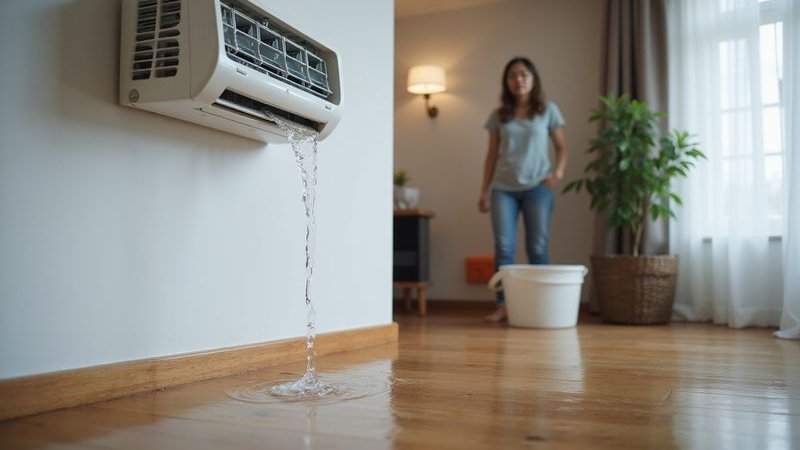
- You see water dripping inside along with the smell (indicates a total drain block).
- The smell is unmistakably like a dead animal.
Schedule a service if:
- The musty smell returns 2 days after you clean the filters.
- The airflow feels weak even on high speed.
- You have not had a chemical wash in over 12 months.
Dealing with a bad AC smell in Kepong or KL? Don’t just mask it with sprays. Contact AC Service Pro at 012-2252 623 for a professional diagnosis and a chemical wash that gets to the root of the problem.
Tags
AC Service Pro Team
Our team of experienced HVAC technicians shares practical tips to help you maintain your aircond and save on energy costs.
Ask Us a Question