How to Reduce Your Aircond Electricity Bill in Malaysia
Practical tips to lower AC electricity costs without sacrificing comfort. From optimal temperature settings to smart usage habits.
We service hundreds of homes across Kepong and Kuala Lumpur every year.
You know that specific dread that sets in when you spot the TNB envelope in your mailbox?
It is a feeling most Malaysian homeowners know too well.
Our team often sees households where the air conditioner accounts for nearly half of the monthly electricity bill.
From what we have seen in the field, the problem usually isn’t just the tariff rate.
The issue often stems from aging units and inefficient usage habits that quietly drain your wallet.
So, let’s look at the hard data on consumption and then walk through the practical fixes that actually work.
Understanding Your AC Electricity Usage
Before fixing the problem, you need to know exactly what you are paying for.
We find that most homeowners underestimate how quickly cooling costs accumulate once they cross into TNB’s higher tariff blocks.
How much does running your AC actually cost?
The following table breaks down the cost based on the current domestic tariff tiers. Note that once your total household usage exceeds 600kWh, every additional unit costs significantly more.
| AC Size | Typical Wattage | Est. Cost/Hour (Tier 2)* | Est. Cost/Hour (Tier 3)** | Monthly Cost (8 hrs/day) |
|---|---|---|---|---|
| 1.0 HP | 900W | RM0.30 | RM0.47 | ~RM112 |
| 1.5 HP | 1,200W | RM0.40 | RM0.62 | ~RM149 |
| 2.0 HP | 1,800W | RM0.60 | RM0.93 | ~RM223 |
| 2.5 HP | 2,300W | RM0.77 | RM1.19 | ~RM285 |
*Based on roughly RM0.334/kWh (Standard usage block) **Based on roughly RM0.516/kWh (High usage block, typical for family homes)
The Inverter Factor: Inverter units are not just marketing hype.
They use 30-50% less electricity because they don’t constantly stop and start like the older non-inverter models we often repair in mature neighborhoods.
The Big Wins: High-Impact Changes
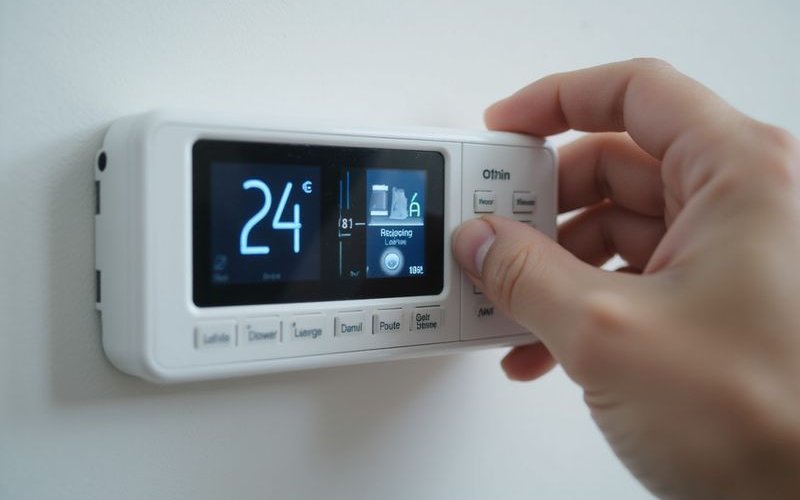
1. The 24°C Rule
This single adjustment is the most effective way to lower your bill immediately.
Why it matters: Every degree you drop below 24°C forces the compressor to work exponentially hard to fight Malaysia’s ambient heat.
We have measured the amperage draw on units set to 20°C versus 24°C, and the difference is massive.
| Setting | Energy Impact | Comfort Reality |
|---|---|---|
| 18°C | Maximum Drain | Compressor rarely cuts off |
| 22°C | High Drain | Often too cold for sleeping |
| 24°C | Optimal | Cool and crisp with a fan |
| 26°C | Saving Mode | Comfortable for lounging |
The sweet spot: Set your unit to 24°C and turn on your ceiling fan (like a KDK or Panasonic) at speed 2 or 3.
The moving air evaporates moisture from your skin, creating a wind-chill effect that makes 24°C feel like 21°C.
2. Master the Fan Mode
Most people ignore the “Mode” button on their remote.
Smart strategy:
- Cool Down: Run the AC on “Cool” mode for the first 30 minutes to drop the room temperature.
- Switch Over: Change the setting to “Fan” mode once the room is comfortable.
- Maintain: The fan circulates the already-cooled air without running the energy-hungry compressor.
When to use fan mode:
- During rainy nights when humidity is high but the temperature is low.
- In the early morning hours (3 AM to 6 AM) when the outside air drops below 26°C.
- When you only need air circulation rather than active cooling.
3. Clean Your Filters and Coils
A dirty air conditioner is a power-hungry air conditioner.
Why? When dust clogs the filters and cooling coils, the fan has to spin faster and the compressor runs longer to push air through the blockage.
Our technicians frequently find units in KL that are so clogged they are running at 130% of their rated amperage just to keep up.
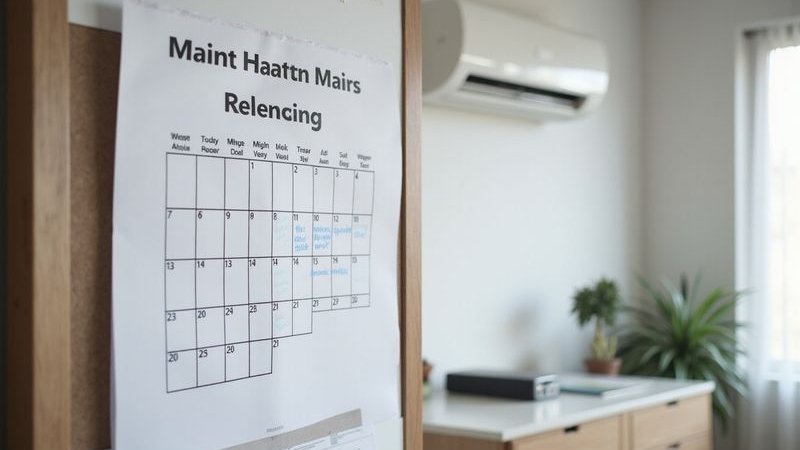
Maintenance schedule for efficiency:
| Task | Frequency | Who Does It? | Savings Impact |
|---|---|---|---|
| Filter Cleaning | Every 2 weeks | You (DIY) | 5-10% |
| General Service | Every 3-4 months | Professional | 10-15% |
| Chemical Wash | Every 12 months | Professional | 15-25% |
4. Optimize Timer and Sleep Functions
Cooling an empty room is the fastest way to waste money.
Timer function:
- Set the unit to turn off 1 hour after you usually fall asleep.
- Set it to turn on 30 minutes before you wake up if you need the morning boost.
Sleep mode: Most modern remotes have a “Sleep” button.
This function gradually raises the thermostat by 0.5°C to 1°C every hour.
Since your body temperature drops while you sleep, you won’t notice the difference, but your TNB meter will.
Savings: We estimate this can reduce overnight cooling costs by nearly 30%.
Medium-Impact Changes
5. Seal Your Room (The “Coolth” Trap)
Cool air is heavy and behaves like water; it will leak out of any gap it finds.
Check for:
- Door Gaps: The space under your bedroom door is a major leak point. A simple “door snake” or foam seal from Mr. DIY costs less than RM10 and works wonders.
- Window Seals: Old rubber seals on aluminum windows often shrink.
- Louvers: Glass louvers (naco windows) are notorious for leaking air even when closed.
6. Block the Solar Heat
Sunlight hitting your windows is essentially a heater fighting your AC.
| Window Covering | Heat Reduction | Notes |
|---|---|---|
| None | 0% | Maximum heat gain |
| Sheer Curtains | ~10% | Barely helps |
| Standard Curtains | 30-40% | Better |
| Blackout Curtains | 60-70% | Highly recommended for bedrooms |
Best practice: Keep your blackout curtains drawn from 11 AM to 4 PM, even if you aren’t in the room, to prevent heat from building up in the walls and furniture.
7. Manage Internal Heat Sources
Your AC has to neutralize every bit of heat generated inside the room.
Common culprits:
- Old Light Bulbs: If you are still using incandescent bulbs, they are generating more heat than light.
- Gaming PCs: A high-performance computer can output as much heat as a small space heater.
- Kitchen Appliances: Avoid using ovens or prolonged stove cooking during the hottest part of the day if your kitchen is open-plan.
Tip: Switching to LED lighting is a one-time cost that lowers both your lighting bill and your cooling load.
8. The “Right Sizing” Rule
Size matters when it comes to efficiency.
General sizing guide:
| Room Size (sq ft) | Recommended HP |
|---|---|
| Small Bedroom (Under 200) | 1.0 HP |
| Master Bedroom (200-350) | 1.5 HP |
| Living Hall (350-500) | 2.0 HP |
| Large Area (500-700) | 2.5 HP |
Factors that increase needs:
- Top-floor rooms (direct roof heat).
- Rooms with West-facing windows (afternoon sun).
- High ceilings (volume increases significantly).
Lower-Impact But Worth Doing
9. Don’t Neglect the Outdoor Unit
The compressor unit outside is the heart of the system.
If it is choked with leaves, dust, or blocked by stacked furniture on the balcony, it cannot release heat.
Monthly check: Take a quick look to ensure there is at least 2 feet of clear space around the fan discharge.
10. Monitor Gas Levels
Refrigerant gas does not “run out” like petrol; it only drops if there is a leak.
Signs of low gas:
- The air coming out isn’t ice cold.
- You see ice forming on the copper pipes near the outdoor unit.
- You hear a hissing sound.
Solution: Our technicians check gas pressure during every chemical wash service. We include FREE gas top-up with chemical wash because a properly charged unit runs efficiently.
The Numbers: Potential Savings
Let’s look at the math for a typical household spending RM300/month on cooling.
| Change | Potential Savings |
|---|---|
| Raise temp (20°C to 24°C) | RM40-65/month |
| Cleaning filters (DIY) | RM15-25/month |
| Annual Chemical Wash | RM30-50/month (amortized) |
| Using Timer/Sleep Mode | RM30-40/month |
| Total Potential Savings | RM115-180/month |
That is a saving of up to RM2,160 a year.
Upgrade Considerations: Repair or Replace?
In neighborhoods like Kepong, we see many 10-15-year-old York or Acson units.
You eventually reach a point where keeping an old unit alive costs more than buying a new one.
| AC Type | Relative Energy Consumption |
|---|---|
| Old Non-Inverter (10+ years) | 100% (Base) |
| New Non-Inverter (R32 Gas) | 75% |
| Standard Inverter | 55% |
| 5-Star Premium Inverter | 45% |
Payback period: With current electricity rates, upgrading an old 1.5HP unit to a new inverter model typically pays for itself in savings within 2.5 to 3 years.
Month-by-Month Action Plan
This Week
- Set all remotes to 24°C minimum.
- Learn how to use the “Sleep” or “Timer” button.
- Buy and install door seals for air-conditioned rooms.
This Month
- Open the front panel and wash the mesh filters.
- Clear any clutter from around the outdoor compressor units.
- Check if your curtains are blocking enough light.
This Quarter
- Book a professional general service.
- Check for mold growth on the blower wheel.
- Review your TNB bill to track the impact of your changes.
This Year
- Schedule a full chemical wash (especially for master bedrooms).
- Assess if units older than 8 years need replacement.
- Inspect insulation in the roof if you live on the top floor.
Tracking Your Progress
You cannot improve what you do not measure.
Steps to monitor:
- Download the myTNB app to view your daily usage.
- Compare your kilowatt-hours (kWh), not just the RM amount, as tariffs can change.
- Look for drops in usage after you implement the “24°C Rule.”
Apps and tools: The myTNB app is excellent for spotting trends, such as higher usage on weekends or during school holidays.
Common Myths Debunked
Myth: “Turning AC off and on uses more electricity than leaving it on.” Truth: This is false for extended periods. If you are leaving for more than 30 minutes, turn it off.
Myth: “Fans cool the room.” Truth: Fans cool people by evaporating sweat. If the room is empty, the fan is just wasting electricity.
Myth: “Setting the temp to 16°C cools the room faster.” Truth: The AC cools at the same speed regardless of the setting; 16°C just makes the compressor run longer without stopping.
Myth: “ACs don’t need service if they are still cold.” Truth: Efficiency drops long before cooling fails completely. A dirty unit burns money even if it feels cold.
Want maximum efficiency from your AC?
A clean unit is an efficient unit.
Contact AC Service Pro at 012-2252 623 for chemical wash service - it typically pays for itself within 2-3 months through electricity savings.
Tags
AC Service Pro Team
Our team of experienced HVAC technicians shares practical tips to help you maintain your aircond and save on energy costs.
Ask Us a Question